City guide

    Pleiku

    Pleiku

    About Pleiku

    A laid-back Central Highlands city known for volcanic lakes, coffee culture, and cooler weather than much of Vietnam.

    At a glance

    Country
    Vietnam
    Region
    Gia Lai Province, Central Highlands Vietnam
    Recommended stay
    2-3 days
    Daily cost
    ≈ $35 / day
    Best time to visit
    Nov –⁠ Apr

    Before you go to Pleiku

    When to go

    Climate through the year

    Scroll to see all months

    Monthly rainfall and temperature
    MonthRainfall (mm)Temperature (°C)
    January214–26
    February715–29
    March2417–31
    April9319–31
    May24921–30
    June32321–27
    July39620–27
    August46320–26
    September35920–27
    October19119–27
    November6217–26
    December1115–26

    Cool dry season (Nov–⁠Feb)

    Dry and mild. Daytime highs about 26–⁠29 °C, nights 14–⁠17 °C; January is the coolest month. Rain is almost absent from December to February (2–⁠11 mm a month); November still sees about 62 mm.

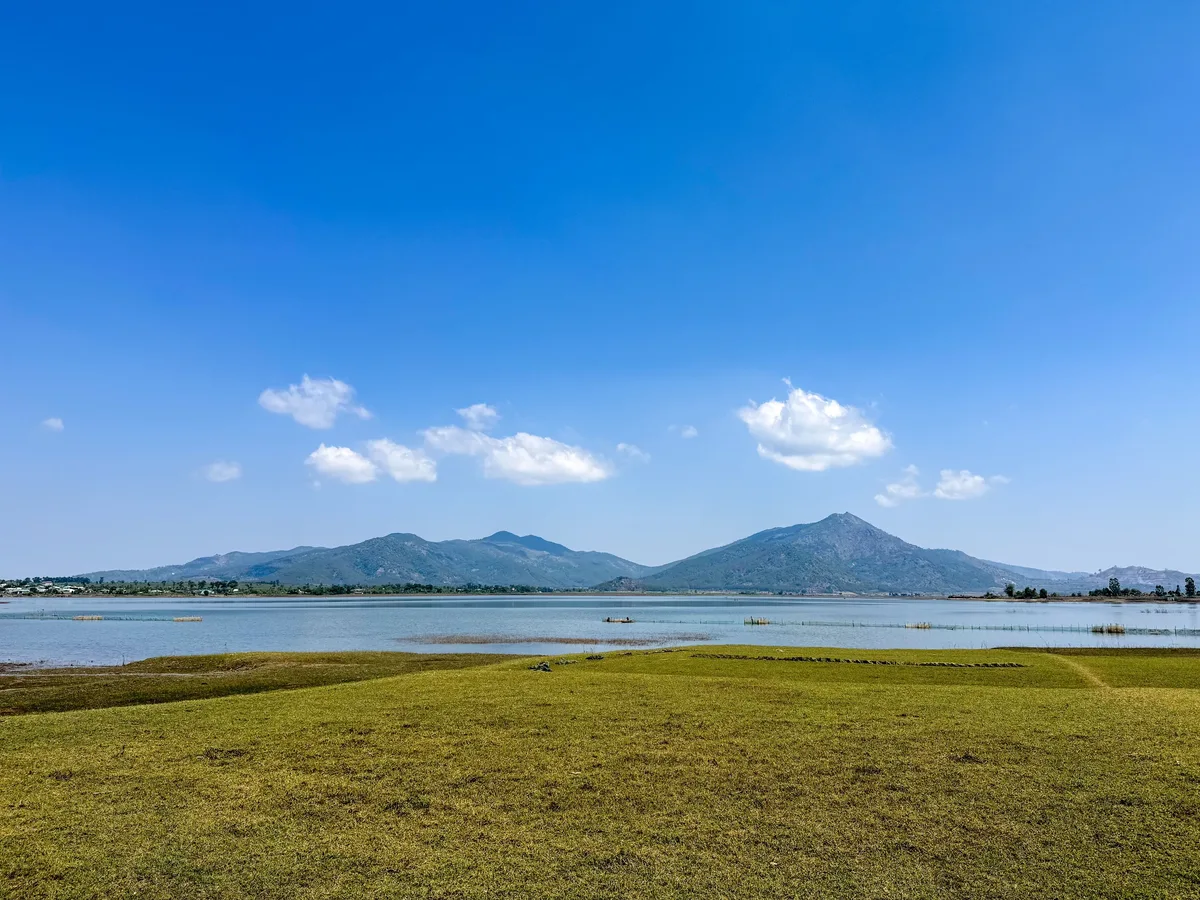
    Clear skies for the lake, tea hill and volcano; wild sunflowers bloom around Chu Dang Ya from late October to early November.
    Early mornings and evenings are chilly for the highlands. Tet (late Jan or Feb) closes many shops and fills transport.

    Ideal for: Bien Ho lake, Bien Ho tea hill, Chu Dang Ya volcano, Minh Thanh pagoda.

    Pack: Light layers, a jacket for early mornings, sun protection.

    Hot dry season (Mar–⁠Apr)

    The warmest months: highs about 31 °C, nights 17–⁠19 °C. March is still dry (24 mm); April brings the first showers (93 mm).

    Mostly sunny days for road trips and viewpoints.
    Afternoons are hot and the first storms can arrive late in the day.

    Ideal for: Day trips by road around the city, pagodas, cafes.

    Pack: Sun hat, sunscreen, water, a light rain jacket for April.

    Rainy season (May–⁠Oct)

    Wet and green. Highs about 26–⁠30 °C, nights 19–⁠21 °C. Rain climbs from 249 mm in May to 463 mm in August, then eases to 191 mm in October.

    Lush hills and fuller waterfalls.
    Heavy showers, especially July to September; muddy tracks around the volcano and tea hill.

    Ideal for: Museums, temples and pagodas, cafes, indoor food stops.

    Pack: Raincoat or umbrella, waterproof shoes, quick-dry clothes.

    Daily budget

    Low season / day
    About $35 per person per day (rough estimate; costs vary with hotel and transport choices)
    Peak season / day
    About $35 per person per day (rough estimate; costs vary with hotel and transport choices)
    Cash
    Carry some Vietnamese dong for small eateries, markets and rural sites such as the lake and tea hill.
    Exchange
    Vietcombank rate on 12 Nov 2026: $1 = 25,480 ₫ (cash), 25,510 ₫ (transfer), 25,890 ₫ (selling). Rates change daily; check the day you exchange.
    ATMs
    Cash machines are found in the city centre; ask your bank about foreign card fees before travelling.
    Cards
    Cards are mainly accepted at hotels and larger restaurants; rural sites and small stalls usually take cash.

    Events & festivals

    • Tet (Lunar New Year)

      Late January or February (date changes each year)

      Family gatherings and flower displays across the city.

      Tip: Many shops and restaurants close for several days and transport is busy, so book early.

    • Wild sunflower season, Chu Dang Ya (Bien Ho commune)

      Late October to early November; a Wild Sunflower Week is held in mid-November (confirm locally)

      Wild sunflowers bloom around the extinct Chu Dang Ya volcano, about 30 km north-east of the city centre.

      Tip: Bloom timing shifts with the weather; ask locally before making the trip.

    • Pleiku Fest 2026 - Symphony of the Great Highlands

      26–⁠27 June 2026 (held in 2026; confirm locally whether it returns)

      Two-day music and arts festival at Dai Doan Ket Square, Pleiku ward, part of National Tourism Year - Gia Lai 2026.

      Tip: Dates for later years are not announced in the sources we checked.

    • Gia Lai International Gong Festival 2026

      30 October –⁠ 8 November 2026 (confirm locally for later years)

      Gong troupes from Vietnam and abroad performed in Pleiku ward and Bien Ho commune; main gong night at Dai Doan Ket Square.

      Tip: Gongs are also played at central squares on Saturday evenings, planned until the end of December 2026.

    Getting there

    How to reach Pleiku

    Arriving internationally

    • There are no regular international flights to Pleiku: fly into Hanoi or Ho Chi Minh City, then connect on a domestic flight.

    From within the country

    • Pleiku has its own airport (PXU). Vietnam Airlines lists direct flights from Hanoi and Ho Chi Minh City; check the airline sites for current schedules, as routes change.
    • By road, National Highway 14 runs through the Pleiku area and links it with other Central Highlands towns.
    • Pleiku is in Gia Lai province. Since 1 July 2025 (merger with Binh Dinh) the provincial seat is Quy Nhon on the coast, and the urban area is now called Pleiku ward.

    Booking & arrival tips

    • Book flights on the airline's own site and check the timetable close to your date.
    • Allow extra time for mountain roads, especially in the rainy season (May–⁠Oct).

    Getting around

    Taxi and ride-hailing apps

    Useful inside the city; availability varies, so check the app or ask your hotel.

    Motorbike or car with driver

    For Bien Ho lake (about 7 km from the centre) and Chu Dang Ya volcano (about 30 km north-east), arrange a car with driver or rent a motorbike if you are licensed and insured.

    Good to know. The city centre is compact, but the main sights lie outside it, so plan transport for each trip.

    Handy apps

    Google Maps

    Navigation and place search.

    Download an offline map of Pleiku and Bien Ho before heading to rural sites.

    Backup. Mobile signal may be weaker around the lake, tea hill and volcano: save offline maps and your hotel address in Vietnamese.

    Health & safety

    Staying safe

    General safety
    Pleiku is generally a calm city. Petty theft and bag-snatching from motorbikes occur across Vietnam, so keep phones and bags away from the road side and out of sight. Road accidents are the main risk: traffic is fast and motorbikes are everywhere, so cross roads slowly and steadily, and only ride a motorbike if you are licensed and insured. Mountain roads to Chu Dang Ya and the tea hill can be slippery and muddy in the rainy season.
    Notes
    Drink bottled or boiled water.
    What to carry
    Light rain jacket in the rainy season (May–⁠Oct); sun protection for dry months.
    Lost items
    Report a loss or theft to the local police and ask for a written report for your insurer; tell your embassy if your passport is lost.
    • Use a hotel safe or lock bag for passports and spare cash.
    • Check the weather before heading to Chu Dang Ya or the lake; storms can arrive in the afternoon from April to October.
    • Keep to marked paths and follow local advice at the volcano crater and the lake shore.
    • Carry your passport and travel insurance details; hospitals may ask for them.
    • Mornings and evenings can be cool in the highlands from November to February: pack a light jacket.
    • For anything serious call 115 or go to a hospital.
    • Operators may speak little English: have your hotel or a local help you call, and be ready to give a nearby landmark.
    • Save your embassy's contact details before travelling.

    Local customs

    Etiquette & local habits

    • Pleiku is home to Jrai and Bahnar communities, and gong culture is part of local life.
    • Dress modestly in villages, temples and rong houses, and ask before photographing people or rituals.
    • At gong performances and sacred places, follow the guidance of local hosts.