
Bamboo Tube Rice
Cơm Lam
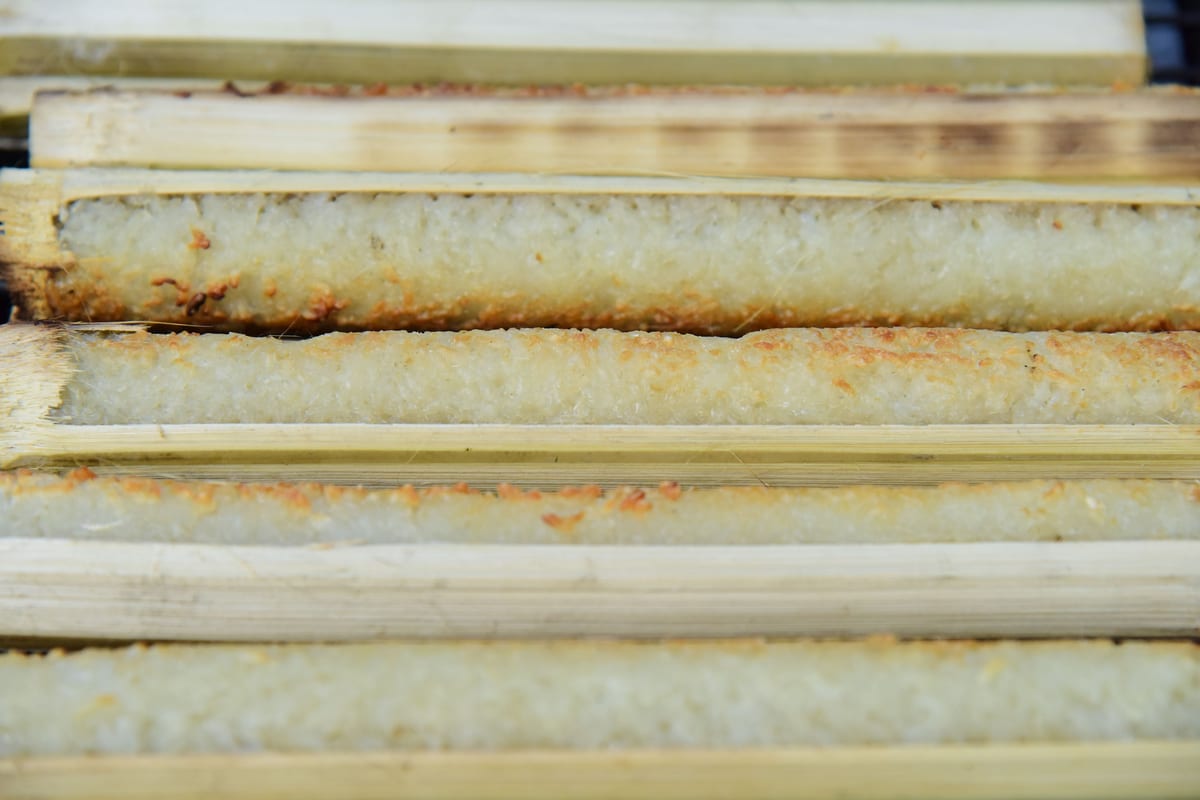
About Bamboo Tube Rice
Sapa's famous bamboo-cooked rice
What's in it
- Glutinous rice
- Young bamboo tube
- Water
- Salt
- Coconut milk or coconut shavings
- Sesame salt
- Grilled meat on the side
Best moments to enjoy it
- Lunch
- Dinner
Best enjoyed hot and fresh after grilling, especially at lunch or dinner after trekking or sightseeing.
Origin & history
Cơm lam comes from the upland ethnic communities of northern Vietnam, where bamboo was used as a practical cooking vessel for travelers and farmers. It became a signature highland dish in places like Sapa, associated with Tay, Thai, Hmong, and other mountain groups, and is now a popular regional specialty for visitors.
How to order & pay
Allergens, nutrition & health
Allergens
Naturally gluten-free, but may be served with sesame, peanuts, or meat-based side dishes; check for cross-contact if you have allergies.
Nutrition & benefits
Provides quick energy from rice, with a filling portion size that works well for active days of trekking in Sapa.
Health notes
Because it is sticky rice, it can feel heavy if you eat a lot at once; drink water and balance it with vegetables or grilled protein. If you have a sensitive stomach, choose freshly cooked servings and avoid sauces that look unrefrigerated.
How to eat it
Peel back the bamboo tube, then push or slice out the rice cylinder. Eat it in small pieces with your hands or chopsticks, dipping into sesame salt, chili sauce, or grilled meat juices. It is easy to share, but a single tube is also a practical solo portion.
Best spots in Sapa
Red Dzao House - Nhà hàng Dao Đỏ
Nhà hàng Dao Đỏ
4b Thác Bạc, Sa Pa, Lào Cai 333100, Vietnam
View on map (opens in a new tab)Sapa Market Street Stalls
Cau May Street, Sa Pa Ward, Lao Cai Province
View on map (opens in a new tab)
Stories about Sapa
All stories
What Is the Best Way to Travel from Hanoi to Sapa? A Complete Transportation Guide 2026
Discover the best ways to travel from Hanoi to Sapa in 2026, including sleeper buses, limousines, luxury trains and private cars, with prices and booking tips.
14 Days in Vietnam: The Itinerary I Actually Did (And Would Do Again)
North to south, Sapa rice terraces, night trains, and a lot of instant noodles eaten in a train couchette.
