
Apple Meo Meo Wine
Táo Mèo Wine
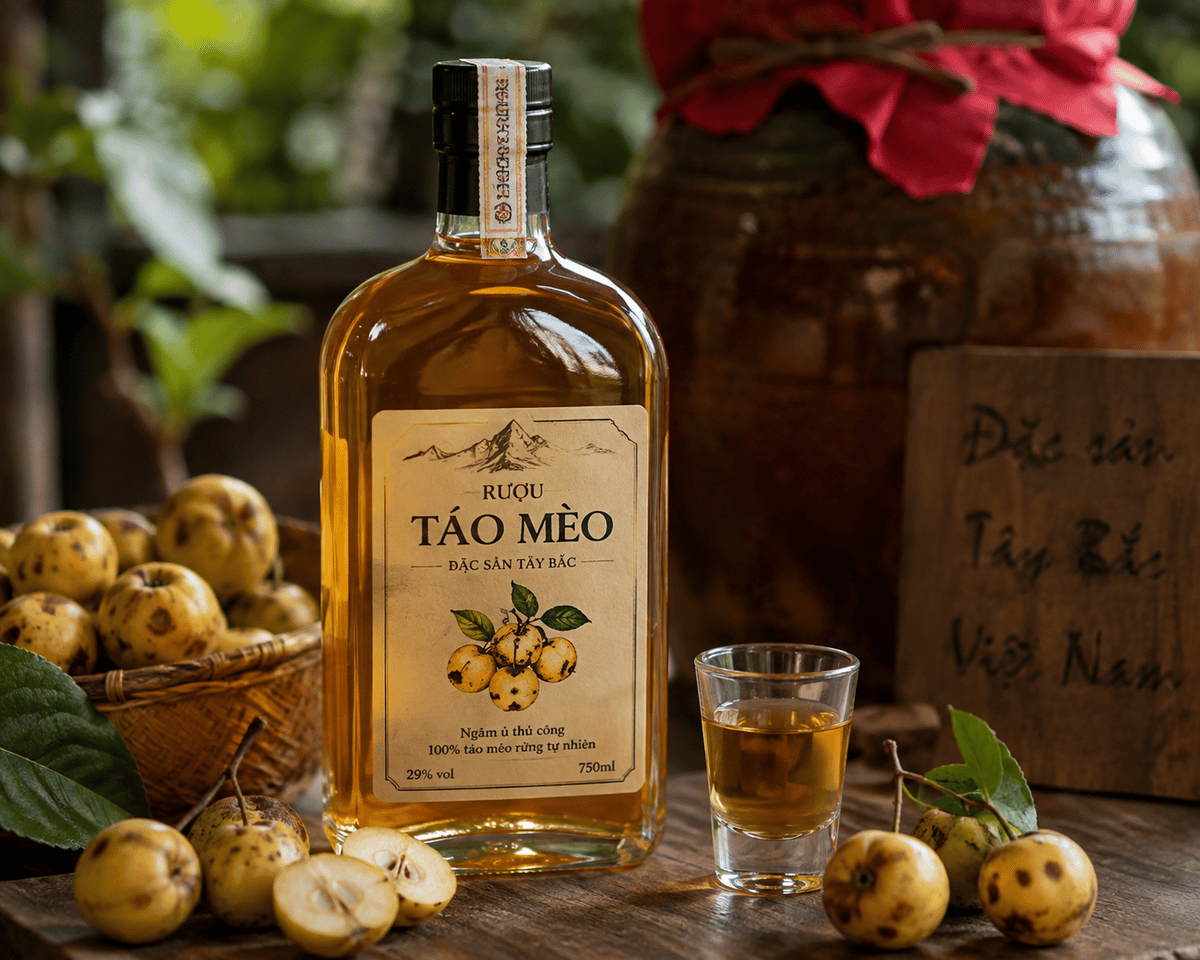
About Apple Meo Meo Wine
A tart, fragrant mountain fruit wine from northwest Vietnam
What's in it
- wild mountain apples
- rice wine base
- sugar
- water
- herbs or spices
Best moments to enjoy it
- Afternoon
- Evening
- Dinner
Best sampled after a meal or in the evening; often offered during local tastings and at mountain homestays
Origin & history
Táo mèo is a wild mountain fruit native to Vietnam's northwest highlands, and the wine is a long-standing local specialty in mountain communities around Sapa and Yen Bai. It is commonly prepared by soaking the fruit in rice wine or fermenting it into a fruit wine, and it has become a popular regional souvenir and tasting drink for visitors.
How to order & pay
Allergens, nutrition & health
Allergens
Contains alcohol; may contain added sugar and traces from homemade fermentation
Nutrition & benefits
Traditionally valued as a warming drink and a digestif; the fruit is also associated locally with herbal and folk uses
Health notes
Drink cautiously because homemade fruit wine can be stronger than it tastes. Avoid if you are pregnant, taking medication that conflicts with alcohol, or have liver or stomach issues. Do not accept unlabeled or suspiciously cheap alcohol.
How to eat it
Sip slowly in small amounts, ideally after food. If served chilled, taste it first before adding ice. For a souvenir bottle, keep it sealed and packed upright. If sharing with locals, accept the first pour politely and pace yourself.
Best spots in Sapa
Red Dzao House - Nhà hàng Dao Đỏ
Nhà hàng Dao Đỏ
4b Thác Bạc, Sa Pa, Lào Cai 333100, Vietnam
View on map (opens in a new tab)Sapa Market Street Stalls
Cau May Street, Sa Pa Ward, Lao Cai Province
View on map (opens in a new tab)
Stories about Sapa
All stories
What Is the Best Way to Travel from Hanoi to Sapa? A Complete Transportation Guide 2026
Discover the best ways to travel from Hanoi to Sapa in 2026, including sleeper buses, limousines, luxury trains and private cars, with prices and booking tips.
14 Days in Vietnam: The Itinerary I Actually Did (And Would Do Again)
North to south, Sapa rice terraces, night trains, and a lot of instant noodles eaten in a train couchette.
