Short answer: yes for most visitors, as long as you know the handful of risks that actually cause problems. Canada rates Vietnam at its lowest advisory level, "Take normal security precautions" (last updated 19 October 2026), and the UK Foreign Office says foreigners are rarely the victims of violent crime. Both governments put the real risks elsewhere: theft of phones and bags, the roads, a few drink and money scams, and the weather.
Vietnam received about 21.2 million international arrivals (all purposes) in 2025, by the national tourism authority's count. This guide sorts what official advice says from what is just reassurance, so you can plan around the risks instead of worrying about them.
What your government's travel advice says
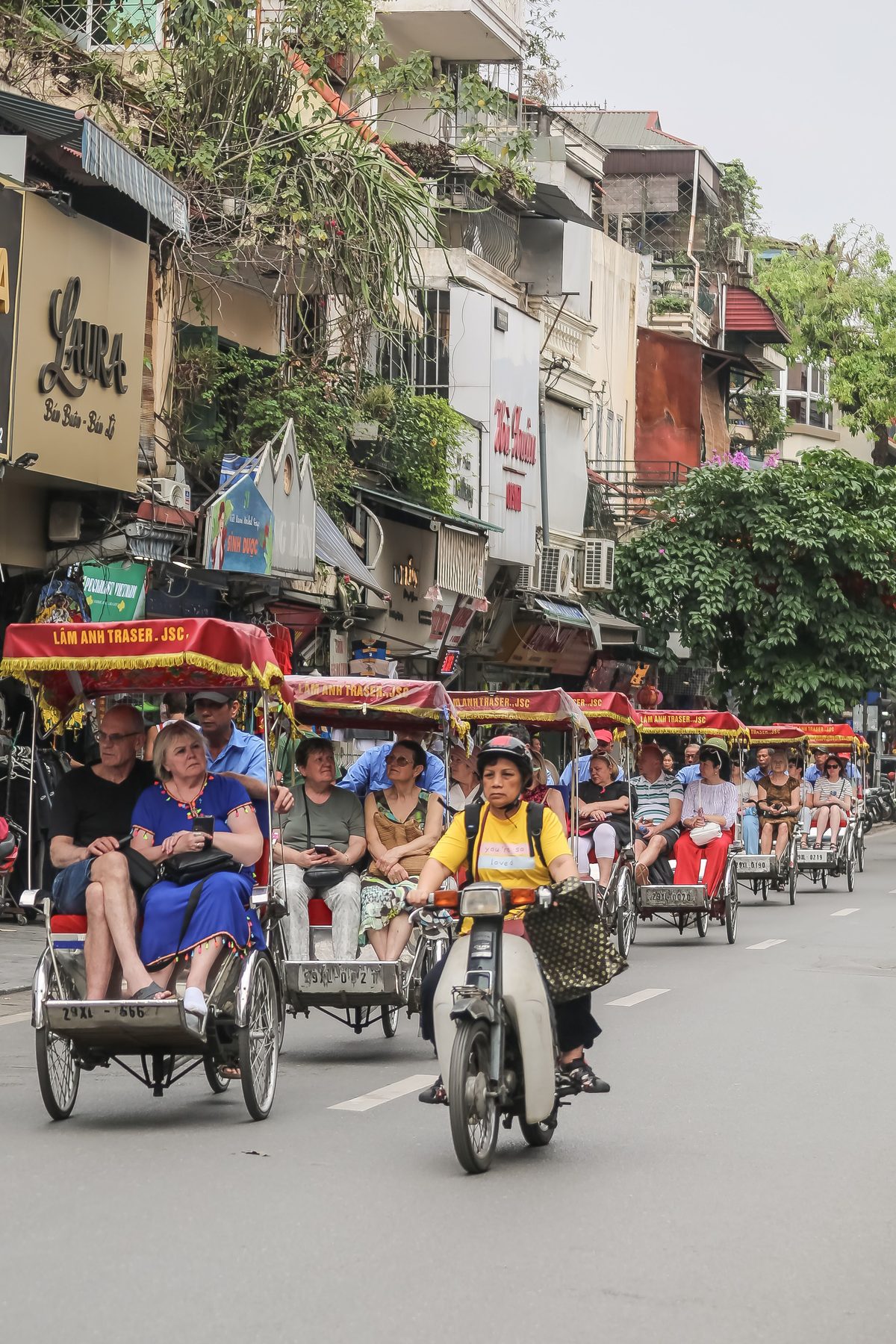
Read your own government's page before you book and again before you fly: it is what your travel insurer will look at, and it changes with storms and events.
Country | Where to read it | What it said on 6 November 2026 |
|---|---|---|
Canada | travel.gc.ca, Vietnam | "Take normal security precautions" (updated 19 Oct 2026) |
United Kingdom | gov.uk foreign travel advice, Vietnam | No part of Vietnam on the FCDO's advise-against list (reviewed 21 Sep 2026) |
United States | travel.state.gov, Vietnam | Level 1, "Exercise normal precautions" (issued 24 Jun 2026) |
Australia | smartraveller.gov.au, Vietnam | Check the current level on the page |
New Zealand | safetravel.govt.nz, Vietnam | Check the current level on the page |
Checked 6 November 2026.
Theft: the problem you are most likely to meet
Pickpocketing and bag snatching are the everyday risk, mostly in the big cities, markets and busy tourist streets. A common method is a passenger on a passing motorbike grabbing a phone or shoulder bag from someone at the kerb. The UK says theft rises over Christmas and Tet (Lunar New Year); Canada also names Tet.
Hold your phone on the side away from the road, or put it away while you walk.
Carry a bag across your body, not on the street side.
If someone grabs your bag, let it go. Being pulled off your feet by a motorbike is worse than losing the bag.
On overnight trains and sleeper buses, keep your passport, phone and cards on you, not in the luggage rack: both governments report thefts while passengers sleep.
Scams and overcharging
Taxis and transfers
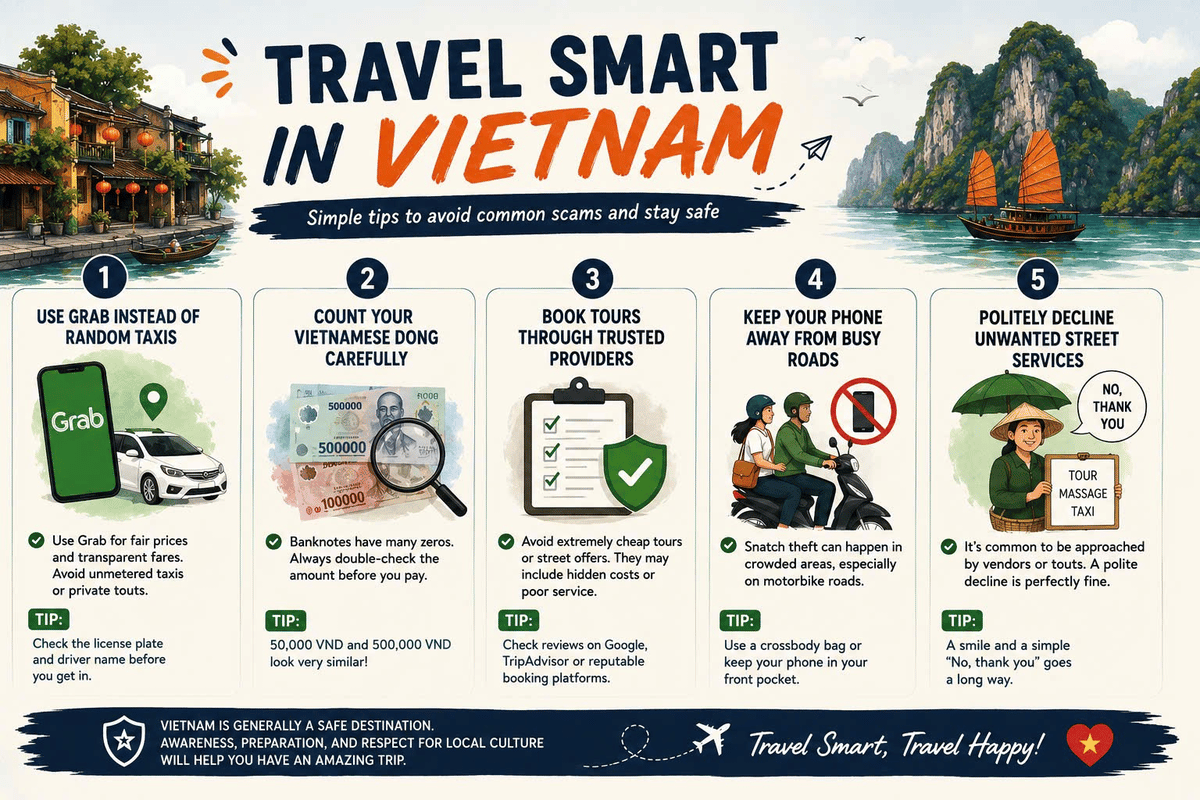
Book rides in an app. Grab shows a fixed fare before you confirm. The UK's advice says Grab and XanhSM send licensed cars. Some scammers pretend to work for them, so book the whole trip in the app, not with a driver who approaches you.
Be wary of "free" buses from the airport or station unless your hotel arranged them. For a street taxi, pick a large metered company and check the meter is running.
Canada's advice also tells visitors to stay off street motorbike taxis (xe om), which it rates as unsafe.
Bars and drinks
Three drink-related risks come up in official advice:
Spiking: keep your drink with you, and say no to drinks, snacks or cigarettes from people you have just met.
Methanol: it has killed people in Vietnam, even from licensed bars, hotels and shops, and you cannot taste or smell it. Buy known brands from proper shops and skip alcohol from street or private sellers. If you feel unwell, get medical help at once.
Bills: Canada warns that some bars and clubs inflate the bill once a customer is drunk.
Money and cards
Dong notes carry a lot of zeros, so count them as you hand them over. Canada reports card and ATM fraud, so avoid paying by card in small shops, cover the keypad when you type your PIN, and keep the card in sight.
Tours that look too cheap
Very low prices can mean hidden extras or a poor boat or bus. Read recent reviews and get the price, inclusions and pick-up point in writing before you pay.
Roads, buses, trains and boats
Canada calls road safety poor across the country. Its advice describes frequent fatal crashes, often involving motorbikes and pedestrians, and motorbikes riding on pavements or against the traffic.
Crossing the street
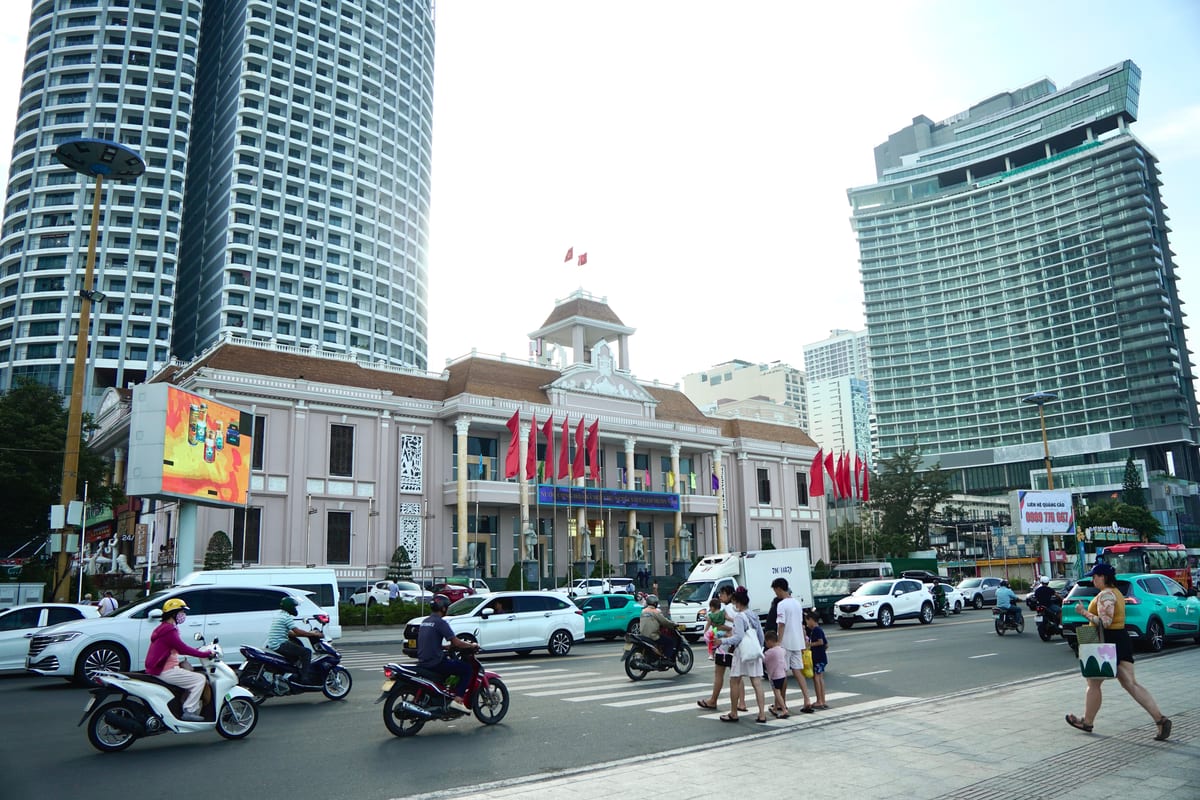
Use footbridges and lights where there are any. Where there are none, cross slowly and at an even pace, and watch the traffic coming toward you. Riders steer around someone walking steadily; sudden stops and dashes are what cause collisions.
Long distances: plane, train or bus
Canada's advice says bus and coach crashes happen often, on overnight and long-haul services too, with fatal sleeper-bus crashes reported, and calls the trains generally reliable. On the long north–south legs, flights and the train are real alternatives:
Hanoi to Hue: flight, night train or sleeper bus compared.
Hanoi to Hoi An: flight and car, night train, or cabin bus.
Ha Giang is reached only by road; for Sapa a night train to Lao Cai is the other choice. For Hanoi to Sapa and Hanoi to Ha Giang our route pages compare day vans, sleeper buses and private cars, with times and prices.
Motorbikes
You do not need to ride one: every main stop on a first trip is reachable by plane, train, bus, car or app ride.
If you do ride, you need three things: a helmet for rider and passenger, a licence Vietnam accepts, and third-party insurance. Check what your permit covers in our international driving permit guide; Canada, for example, says Vietnam does not recognise Canadian permits.
Check that your travel insurance covers riding. If you would rather not drive yourself on the Ha Giang Loop, ride behind a local driver.
The UK warns that foreigners involved in a traffic accident have been barred from leaving the country while the police investigate, which can take a long time.
Boats
For a Ha Long Bay or island boat, check that the boat is registered, ask for a safety briefing and make sure there are life jackets. The UK notes past accidents on overnight Ha Long boats linked to overcrowding.
Is Vietnam safe for solo and women travellers?
Many people travel Vietnam alone; hostels, group tours and cooking classes make it easy to meet others. Official advice is frank that women travelling alone can face harassment, and that sexual assaults have been reported in bars, nightlife areas, beach destinations and taxis, some linked to unlicensed taxi drivers. Practical steps:
Use app-booked rides, check the plate and the driver's name before getting in, and share the trip with someone.
Keep your hotel's address saved on your phone.
Watch your drink, and leave with people you trust.
Tell someone at home where you will be each night.
Health
Health deserves as much planning as crime. Mosquito-borne diseases, dengue among them, are a risk across the country; read our guides to mosquitoes in Vietnam and dengue fever. The UK advises checking vaccines at least 8 weeks before you travel, and lists air pollution and, in parts of Vietnam, altitude as further risks.
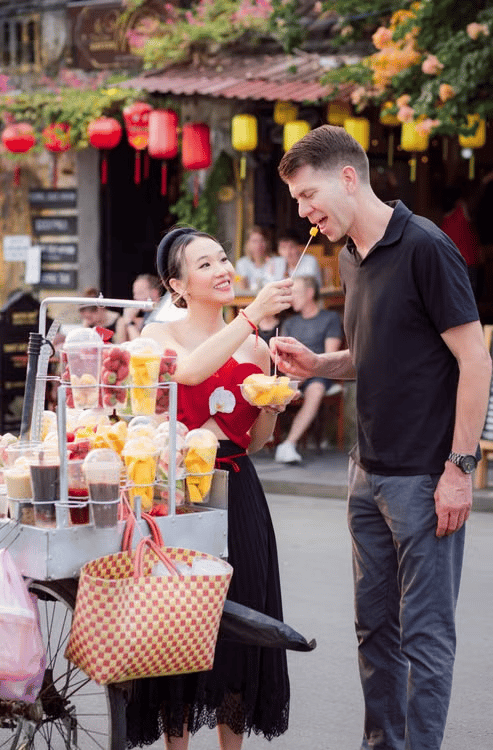
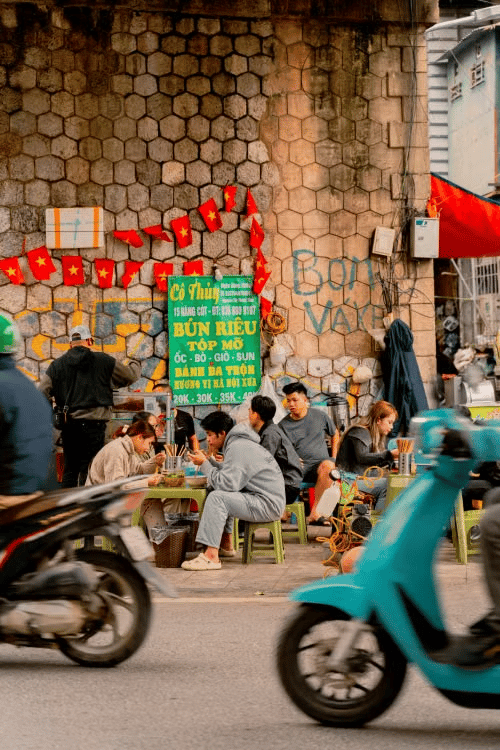
Street food is one of the best parts of a trip. A stall that is busy, cooks to order and serves food hot is a sensible choice.
Laws that catch visitors out
ID: carry photo ID. The UK says a printed copy of your passport photo page and visa is accepted; keep the passport itself in the hotel safe, and carry it on flight and train days.
Your passport is not a deposit. Do not leave it with a motorbike rental shop or a landlord: it can be held against claimed damage.
Drugs: penalties are severe whatever the amount, including cannabis, and the death penalty exists for serious cases.
Photos: do not photograph military sites, border posts or police checkpoints, even unmarked ones.
Domestic flights: fly on the same passport you entered Vietnam with, or you may be refused boarding.
Weather and the countryside
Storms are the risk most likely to change your plans. The UK gives May to November and Canada June to December, with flooding and landslides. If your dates fall in those months, keep a spare day before an international flight and follow local forecasts.
Away from the main sights, in Quang Tri province and along the Lao border, unexploded ordnance from the war is still a risk. Stay on paved roads and marked paths.
Who to call in an emergency
Service | Number |
|---|---|
Police | 113 |
Fire | 114 |
Ambulance | 115 |
These lines answer in Vietnamese, so ask your hotel or a local to call for you, and contact your insurer as soon as you are referred to a hospital. Save your embassy's phone number before you travel.
Before you leave home
Buy travel insurance that covers the activities you plan, motorbikes included.
Save a copy of your passport photo page and visa on your phone and on paper.
Install Grab or XanhSM and add a card.
Carry some dong for the first day.
Check the weather for each region: the north, centre and south have different seasons.
Read your government's travel advice page (table above).
Keep it in one trip. In GoPhuot you can add your tickets and booking confirmations to the trip and keep a photo of your passport in your account, private to you. On the web, send family a read-only link to your day-by-day plan; they do not need an account, and you can switch the link off at any time.
So, is Vietnam safe?
For a typical two- or three-week trip, the things that go wrong are a snatched phone, an inflated taxi fare, a stomach upset, a storm delay or, most seriously, a road accident; serious crime against visitors is rare. Pick app-booked rides, watch your phone and your drink, choose flights or trains for the longest legs, and buy insurance that covers how you will travel.
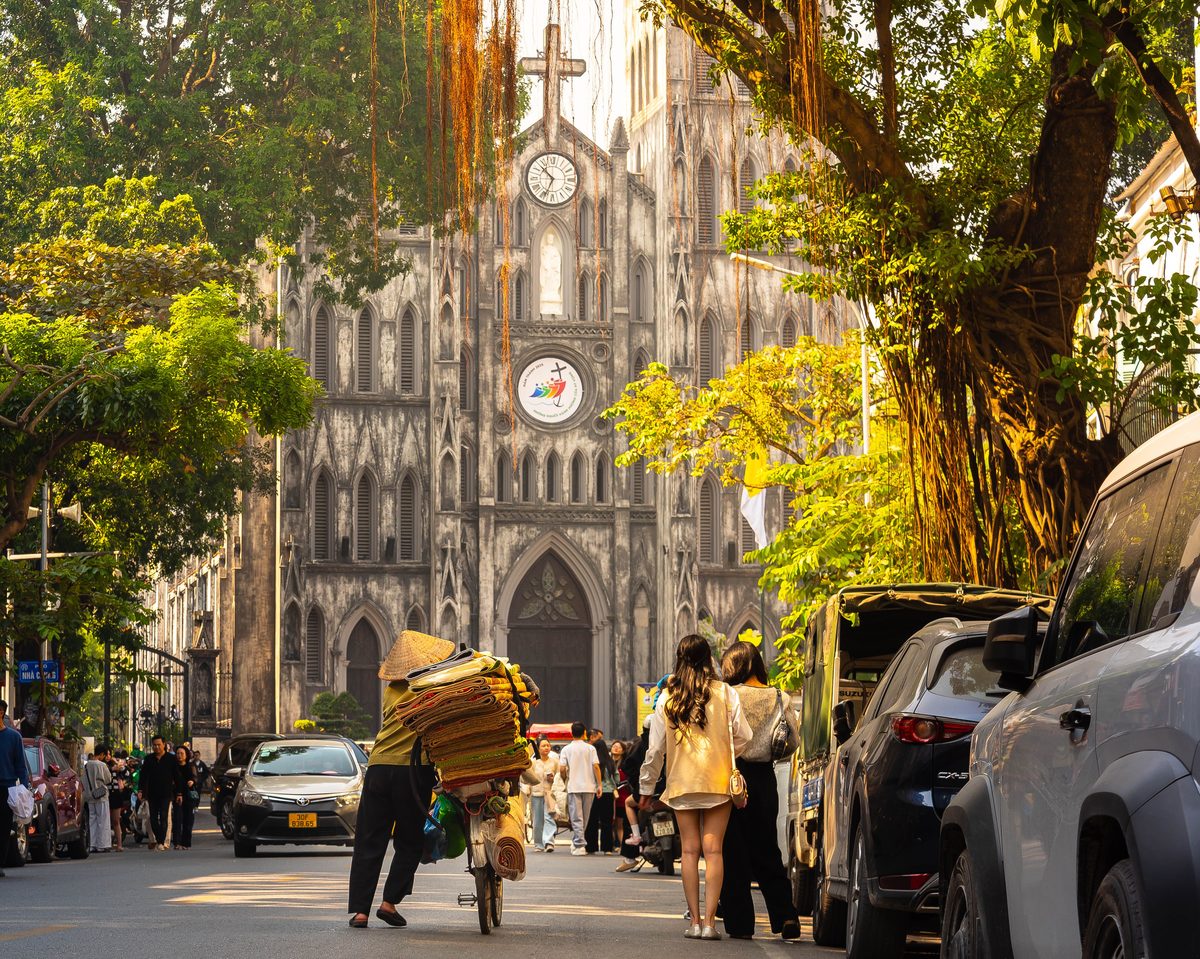
Plan the route with GoPhuot. Build your trip day by day with cities, stays and the transport between them on one map, or start from our 2-week north-to-south itinerary. In the mobile app you can keep editing your trip with no signal.